
Recently a page came up in my newsfeed articulating quite well that veganism is racist. Of course, this is an interesting argument, and it stems from the idea that in order to grow and harvest produce certain populations are exploited. Cash crops like quinoa that are a staple of diets in tropical climes, sustaining the hungry population, are now stripped off the earth and sent to Waitrose. All over the world non whites are paid a pittance to harvest our everyday essentials like tea, coffee, cocoa and sugar. Its hard to tell whether "Fairtrade" is a real thing or a marketing gimmick, but the way of supplying our groceries has not changed much since colonial times. This was the argument that the page espoused, however, it may have been charged with social justice and identity politics (such is life online), but it originated in the US. Mexicans, Afro Caribbeans and other People Of Colour have long been exploited over there in the growing of tobacco, cotton and foodstuffs, but in the UK things are slightly different, although still racist, it is more to do with other kinds of vulnerable cheap labour that can exploited, such as Eastern Europeans: white, but maybe less so..
So, if our staples in the Western World are produced by the exploitation of The Other, where does that leave painting?
Even before we get onto the subject of cotton and its story, lets think about the pigments that came about when artists were still painting on plaster and wooden board.
Before the advent of petrochemicals and the manufacturing processes that bring about our modern day paint colours, pigments were derived from minerals and exotic animals. The cochineal insect and the precious Lapis Lazuli blue stone are not to be found in this country, so where did they come from? Who was searching for the beetles and gathering them up to be turned into red paint? What poor souls were in the mines in dreadful conditions hacking away lumps of Lapis and Gold for artists to embellish their religious iconography? I would guess native and poor populations were exploited, and I hope to find out more about the provenance of pigments.
Now lets talk Cotton.. Cotton has been problematic historically and it is well documented. The harvesting of cotton by black slaves still leaves an ugly social scar to this day. But whence the canvas and calico painters used as a surface? , for that matter, does linen come from?
Whether to decorate or document, the surface and the pigments have a hidden story all of their own, and artists were either blissfully or willingly to confront this in their work.
Now of course, we face a different dilemma. In order that we have paint, we must have pigments, and if you are using acrylic, plastic body. Much of these ingredients come from the petrochemical industry. Oil paintings may have a vegetable oil carrier, but what are the manufacturing and cultivating processes of this bulk of plant based oil? We know that intensive farming and the petrochemical industry contribute to global warming, and the effects of climate change on poorer less resourced communities, so is painting still a viable, ethical practise for the artist in the 21st century?
Saturday, 3 February 2018

For Those Who Have Been Blessed By God
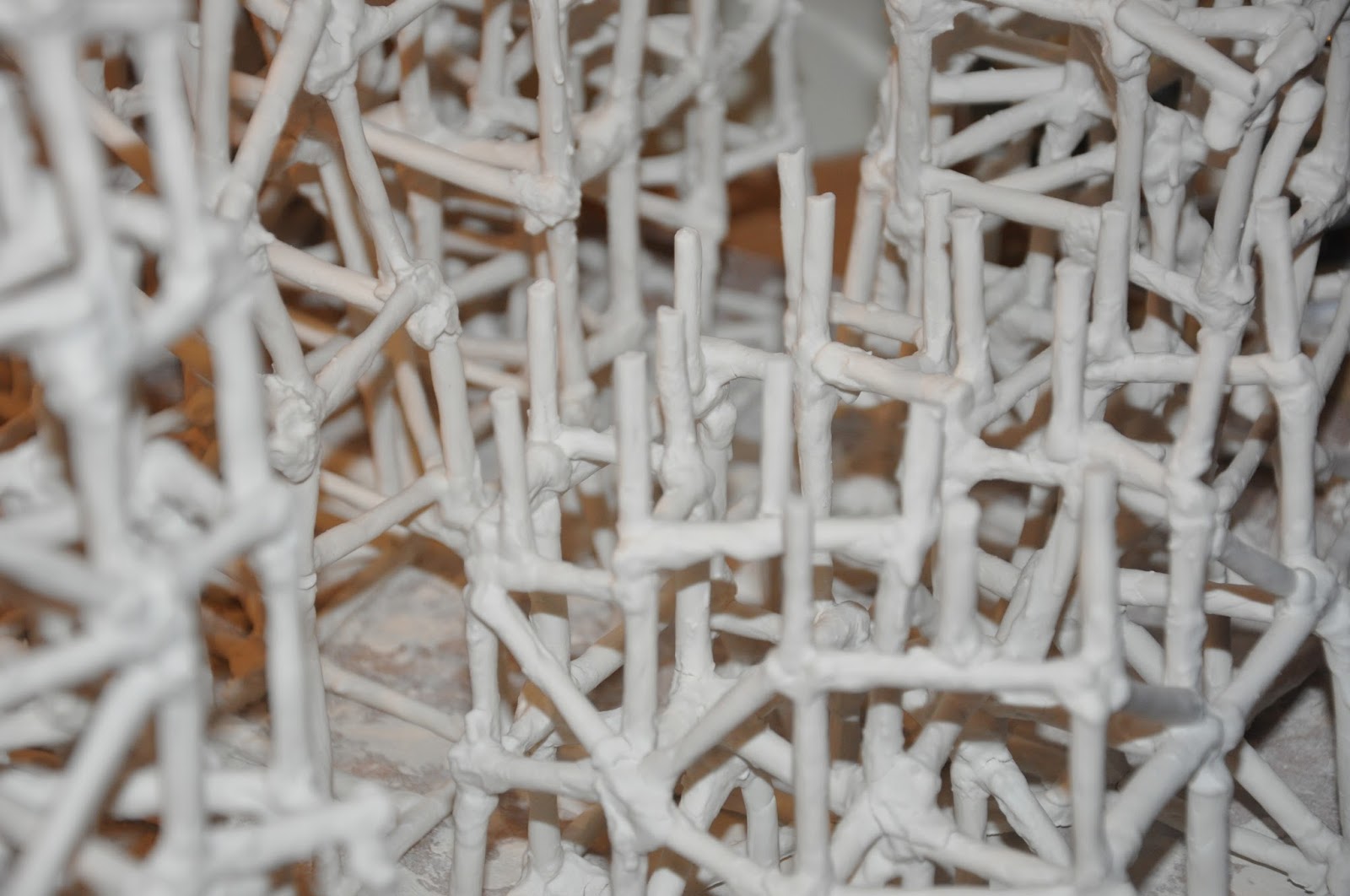
You have to be very careful what you post on the internet these days. People will have a visceral personal reaction to something you might consider an interesting dialogue, or even incocuous. In the 21st Century everyone belongs to a minority, whether it be right wing, left wing, religious, atheist, vegan, disabled, neurodiverse, black, brown or whatever. Everyone has the internet directly at their fingertips, living in the here and now, on the edge of emotion, with behavourial fillters swept away by anonymity.. allowing passions to rage free. The equivalent of throwing cat shit over a neighbours fence.
So, with all that in mind, and because I am a Socially Aware individual and artist, although some extremists would dispute that (they are basically playground sneerers and bullies at the end of the day) I am going to state my intent and reflection for this ceramic creation as follows:
For Those Who Have Been Blessed By God
This was a title that came to me actaully after making these ceramic sculptures.
They are irregular, fragile, insecure. Sometimes they fell apart during construction and the stress of handling, gravity, and exposure to extremes (high temperatues in the kiln, sudeen heat and dryness).
Mostly they are imperfect. And organic, with their own construction, much like neural networks building up or a body developing from fetus.
In society, especially in those religious groups, people with healthy happy children or great careers and household call themselves "blessed". They have the upper hand. If they have succeeded and everything is perfect, they publicly thank an imaginary diety, but really they are boasting. This is not just a 21st century phenomenon, it has reared its head in literature throughout the ages. To be perfect, and to be wealthy, is to be favoured and endowed. Sinners suffer poverty and illmess through their own doings. Its as prevalent an attitude today as it has ever been. Does this person deserve state assistenace..?
On the otherside of the spectrum are those who are parents or sufferers themselves of disability or mental defiecency. Those (like myself) who are "imperfect", "broken", "wrong". They may identify as blessed bacause of the the quirks that their state of mental or physical difference endows them with. Parents of Downs Syndrome children talk of their warmth and affection. Sufferers of ADHD talk of their amazing ideas, people with Autism often have gifts of mathematics or drawing. Depressives have deep insight. Anxious people will empahise and bond with the vulnerable and lonesome.
So this work celebtate all that is "WRONG" or "imperfect" within humanity.
It is to tell people who are perfect and flawless and blessed that we imprefrct and flawed can also be blessed. And they have to shre the world with us, see us for what we are, all higgedlt piggedly, whther they like it or not. We irregylars are there, and we will be recognised, not euthenised.
Saturday, 28 December 2013

Tuesday, 5 November 2013

Monday, 28 October 2013
The Nearly Morning Pages Every So Often
I'm afraid of committing words to paper. There, I've admitted it. Paper scares me. The computer screen is OK but the paper page is like a blank canvas - once you have violated that purity and positioned yourself on the sublime infininate white space that is it, no going back, no erasing. On a computer, its very very different. You can delete and amend to your heart's content. Re-write, re-frame, save, edit, draft, edit again, read it, swap it around, destroy everything if you like, write it all again, then finally publish. It's a cowards way of writing, really, but its better than nothing!
The computer allows you time, but can remove sponteniety. It does however encourage parallel thinking. Halfway through you can wander off and research a subject or find a replacement word or even world, and get lost in the internet - but the danger to cut and paste other people's ideas is then very present. You may lose yourself along the way.
In "The Artists Way" the emphasis is on the writer/creators own authentic and unedited ideas, and thus writing on paper is crucial. There really is no substitute to unfettered free-association and scribbling. You can write in the lines, in the margins, create your own concrete poetry and have no lines at all. You are not limited to the serial process in this repect, as one line does not necesarrily follow another as in the process of typing. You are present and in the moment but also leave a legacy. It will probably only be a private legacy but it belongs to you. So why should it be any more scary than writing a blog that any Tom Dick or Harriet can see? Its a barmy paradox, is what it is!
And if you dont like what you've written, there's always the shredder or the fireplace, if you really really want to "delete without recovery". But maybe mental recovery depends on the ability to recover lost documents of your existence. Hence writing. It doesn't really matter if its on paper, on screen, as long as its written down - in your own langauge be that alphbetical, musical or visual - that's all that matters. In a world where we are subdued by other people's texts and contexts, where we are assaulted by information and the simulcra (images plastered over images plastered over reality), where we cannot pick the threads out of the ropes around our necks, its even more important to reinforce our own identities with our own texts.
(By the way you might have noticed I haven't used any spellchecking here. Make of that what you will!)
 (ceramic scribbles)
The computer allows you time, but can remove sponteniety. It does however encourage parallel thinking. Halfway through you can wander off and research a subject or find a replacement word or even world, and get lost in the internet - but the danger to cut and paste other people's ideas is then very present. You may lose yourself along the way.
In "The Artists Way" the emphasis is on the writer/creators own authentic and unedited ideas, and thus writing on paper is crucial. There really is no substitute to unfettered free-association and scribbling. You can write in the lines, in the margins, create your own concrete poetry and have no lines at all. You are not limited to the serial process in this repect, as one line does not necesarrily follow another as in the process of typing. You are present and in the moment but also leave a legacy. It will probably only be a private legacy but it belongs to you. So why should it be any more scary than writing a blog that any Tom Dick or Harriet can see? Its a barmy paradox, is what it is!
And if you dont like what you've written, there's always the shredder or the fireplace, if you really really want to "delete without recovery". But maybe mental recovery depends on the ability to recover lost documents of your existence. Hence writing. It doesn't really matter if its on paper, on screen, as long as its written down - in your own langauge be that alphbetical, musical or visual - that's all that matters. In a world where we are subdued by other people's texts and contexts, where we are assaulted by information and the simulcra (images plastered over images plastered over reality), where we cannot pick the threads out of the ropes around our necks, its even more important to reinforce our own identities with our own texts.
(By the way you might have noticed I haven't used any spellchecking here. Make of that what you will!)

Sunday, 8 September 2013
Fruits of the Forest/Evanescent Seasons
I have now been in the Forest 1 year, 1 week, and 2 days.
A year ago I was busying myself decorating and gardening and trying to fill the void left by losing everything I had ever known in London. It took me 15 years to finally find a place in the world there, and giving it up was painful. So painful, in fact, that it manifested itself in terrible migraines that lasted for a day or 2 at a time. When I was supposed to be checking what was going on and coming off the moving van, I had to lie down, I prayed for darkness. I had to excuse myself from the relations that had come to help me and my husband, I couldn't bear the busy-ness of it all, and of course no-one excells in busy-ness more than a mother-in-law. It was all too much and I literally felt like my head was going to explode.
For the first week it was like an exciting holiday. We had our best mate down, explored the area, and tried many new beers and food in the pubs. Hub had 10 days off work. We started leisurely then knuckled down. Walls were painted, doggy smelling carpets were ripped out, and expensive cottagy wood furniture was purchased. Then he went back to work, the improvements slowed down, and problems with the house started appearing. The garden was a jungle. The central heating died. The cats got into fights. The contacts I tried to make in community arts dried up. They said they didn't need me after all.
What had this done to my creative output?
It had killed it.
I wanted to make things in the house better. I wanted to find a job. I wanted to feel as comfortable as I did before. I had no energy to create. I didn't know what I wanted to paint but I DID know I didn't want to paint twee landscapes full of bluebells and deer. I felt too urban to belong. All around me were strange accents belonging to even stranger people.
I tried sign-writing for the local steam railway. I was clearly intruding on an old boys club, and it was so cold in the machine room. I didn't feel like celebrating Christmas. I didn't have the heart for it. And the Christmas before, my dear feline friend was suddenly taken from me. It took a trip to the craft centre with my sister and buying a tree and garland there to make it more festive and heartwarming.
But the months dragged on and all I was doing was drawing and rehashing old ideas on pieces of paper, and pathetic attempts at my own style of landscape - so at least I could do something commercial. I had hopes of showing at a London gallery but they changed their mind at the last minute. My work was all packaged up and new work showed no sign of appearing. I was too frightened to work in the barn in case it all had to stop for the builders, and it was damp and had a scary rickety ladder in. I was freezing cold and all I wanted was a warm duvet, the cats, the laptop, and a bottle of good single malt.
I gritted my teeth and tried to get on - I signed up for the Open Studios to give myself some incentive to sort the barn out and make it presentable by July. I had sold a bit of work at a Christmas Craft Fair and that also gave me a little green shoot of confidence. The green shoots were so fragile and not frost proof though, the soil they were growing out of was also cold and barren.
In early spring, when I had decided not to wait for the building work and improvements to the barn and to make some work in the meantime, I took some of my inheritance and bought a kiln. I had no idea what to buy as I'd previously only ever used someone elses, and most of the times they had done the firings for me. It was scary and exciting. My first firing went unbelievably well and this spurred me on. And, as the Open Studios approached, and I took lots of stored work out of its boxes, I was amazed at the variety of work I seemed to have produced. I even found some ceramics going back to 1994!
I had fallen out with a local artists collective in Gloucester and this had dampened my enthusiasm somewhat. I wanted to paint magpies and birds to sell there and they seemed up for this, and showed interest in my "splat" paintings. But then they decided I had no place there, and one of the artists suddenly started painting birds...
But I did the magpie paintings anyway, my rationale was that I was re-using old canvases, so it didn't matter if I messed them up. I felt detached making them though, as if trying to re-kindle an old relationship that had died due to lack of committment. My lack of skill made me feel guilty, like it was a lack of love.
What started to turn things around was working at the local museum. I put a painting in there as part of a local artists show, I didn't even get to see the other artists displaying there, only their work. The painting was a vibrant, abstract expressionist piece I'd done at Horley in the summer between 2 terms at Brighton. It was a very experimental piece and I'm surprised at the positive responses I got. One woman said she found it hard to tear herself away from it, and kept going back and looking at it. And she was just a volunteer there, not even "very arty" herself. It was wonderful to be able to communicate with this new audience, and a great and pleasing surprise. I volunteered to help with the Big Draw, and from this regular workshops began. Not paid ones, but I got so much good feedback and enthusiasm both from the museum and the public it didn't matter. It helped boost my confidence for the Open Studios. I certainly didn't care whether I sold anything or not from my studio, hoping I might flog a few spotty cats, but I ended up selling 2 paintings for quite a good amount!
I started making some more tentacle pots that I enjoyed making in Battersea. I got myself some outside support. My Mojo was returning! I made bigger and more colourful paintings. I got a page in a glossy brochure advertising my workshops at the museum.
I said goodbye to the splat painting idea by making my final one as loud and pink as it gets, ready to move on with something else. It was time to move on. That series of paintings went out with a bang, but still new followers are liking them, both on the net and in real life.
My work has always explored new areas. It would give an art therapist real food for thought! As I have got stronger as a person, my work has become more delicate. The colours have ceased to dominate the canvas, there is a lot of white space, the calm split by a slight intervention (or scar?), the ceramics has gone from thick and fleshy to thin and delicate, so fragile it looks like it could be destroyed by merely breathing on it. Maybe this is my fragility being dealt with in a literal sense, or maybe it is that I dont need to shout with my creative voice to drown out the other, more contemptuous voices within. Maybe I am becalmed, and the work shows my voice needs only to be a whisper to suggest ideas.
And I have taken up singing again.
A year ago I was busying myself decorating and gardening and trying to fill the void left by losing everything I had ever known in London. It took me 15 years to finally find a place in the world there, and giving it up was painful. So painful, in fact, that it manifested itself in terrible migraines that lasted for a day or 2 at a time. When I was supposed to be checking what was going on and coming off the moving van, I had to lie down, I prayed for darkness. I had to excuse myself from the relations that had come to help me and my husband, I couldn't bear the busy-ness of it all, and of course no-one excells in busy-ness more than a mother-in-law. It was all too much and I literally felt like my head was going to explode.
For the first week it was like an exciting holiday. We had our best mate down, explored the area, and tried many new beers and food in the pubs. Hub had 10 days off work. We started leisurely then knuckled down. Walls were painted, doggy smelling carpets were ripped out, and expensive cottagy wood furniture was purchased. Then he went back to work, the improvements slowed down, and problems with the house started appearing. The garden was a jungle. The central heating died. The cats got into fights. The contacts I tried to make in community arts dried up. They said they didn't need me after all.
What had this done to my creative output?
It had killed it.
I wanted to make things in the house better. I wanted to find a job. I wanted to feel as comfortable as I did before. I had no energy to create. I didn't know what I wanted to paint but I DID know I didn't want to paint twee landscapes full of bluebells and deer. I felt too urban to belong. All around me were strange accents belonging to even stranger people.
I tried sign-writing for the local steam railway. I was clearly intruding on an old boys club, and it was so cold in the machine room. I didn't feel like celebrating Christmas. I didn't have the heart for it. And the Christmas before, my dear feline friend was suddenly taken from me. It took a trip to the craft centre with my sister and buying a tree and garland there to make it more festive and heartwarming.
But the months dragged on and all I was doing was drawing and rehashing old ideas on pieces of paper, and pathetic attempts at my own style of landscape - so at least I could do something commercial. I had hopes of showing at a London gallery but they changed their mind at the last minute. My work was all packaged up and new work showed no sign of appearing. I was too frightened to work in the barn in case it all had to stop for the builders, and it was damp and had a scary rickety ladder in. I was freezing cold and all I wanted was a warm duvet, the cats, the laptop, and a bottle of good single malt.
I gritted my teeth and tried to get on - I signed up for the Open Studios to give myself some incentive to sort the barn out and make it presentable by July. I had sold a bit of work at a Christmas Craft Fair and that also gave me a little green shoot of confidence. The green shoots were so fragile and not frost proof though, the soil they were growing out of was also cold and barren.
In early spring, when I had decided not to wait for the building work and improvements to the barn and to make some work in the meantime, I took some of my inheritance and bought a kiln. I had no idea what to buy as I'd previously only ever used someone elses, and most of the times they had done the firings for me. It was scary and exciting. My first firing went unbelievably well and this spurred me on. And, as the Open Studios approached, and I took lots of stored work out of its boxes, I was amazed at the variety of work I seemed to have produced. I even found some ceramics going back to 1994!
I had fallen out with a local artists collective in Gloucester and this had dampened my enthusiasm somewhat. I wanted to paint magpies and birds to sell there and they seemed up for this, and showed interest in my "splat" paintings. But then they decided I had no place there, and one of the artists suddenly started painting birds...
But I did the magpie paintings anyway, my rationale was that I was re-using old canvases, so it didn't matter if I messed them up. I felt detached making them though, as if trying to re-kindle an old relationship that had died due to lack of committment. My lack of skill made me feel guilty, like it was a lack of love.
What started to turn things around was working at the local museum. I put a painting in there as part of a local artists show, I didn't even get to see the other artists displaying there, only their work. The painting was a vibrant, abstract expressionist piece I'd done at Horley in the summer between 2 terms at Brighton. It was a very experimental piece and I'm surprised at the positive responses I got. One woman said she found it hard to tear herself away from it, and kept going back and looking at it. And she was just a volunteer there, not even "very arty" herself. It was wonderful to be able to communicate with this new audience, and a great and pleasing surprise. I volunteered to help with the Big Draw, and from this regular workshops began. Not paid ones, but I got so much good feedback and enthusiasm both from the museum and the public it didn't matter. It helped boost my confidence for the Open Studios. I certainly didn't care whether I sold anything or not from my studio, hoping I might flog a few spotty cats, but I ended up selling 2 paintings for quite a good amount!
I started making some more tentacle pots that I enjoyed making in Battersea. I got myself some outside support. My Mojo was returning! I made bigger and more colourful paintings. I got a page in a glossy brochure advertising my workshops at the museum.
I said goodbye to the splat painting idea by making my final one as loud and pink as it gets, ready to move on with something else. It was time to move on. That series of paintings went out with a bang, but still new followers are liking them, both on the net and in real life.
My work has always explored new areas. It would give an art therapist real food for thought! As I have got stronger as a person, my work has become more delicate. The colours have ceased to dominate the canvas, there is a lot of white space, the calm split by a slight intervention (or scar?), the ceramics has gone from thick and fleshy to thin and delicate, so fragile it looks like it could be destroyed by merely breathing on it. Maybe this is my fragility being dealt with in a literal sense, or maybe it is that I dont need to shout with my creative voice to drown out the other, more contemptuous voices within. Maybe I am becalmed, and the work shows my voice needs only to be a whisper to suggest ideas.
And I have taken up singing again.
Wednesday, 28 August 2013
Spike and Stripe
A few weeks ago, just before the heavens opened and the wrath of some god poured scorn on our West Country summer, I happened to make the long awaited pilgrimage to Bristol.
I say "pilgrimage" because ever since my foundation year this city has loomed large in my conciousness as a place where urban contemporary art flourishes and that conceptual ideas are explored seriously. I used to read the Fine Art course description in the UWE prospectus and it seemed to be even more serious than Goldsmiths, considered and thoughtful reflections and applications of fine art, and my tutor at Croydon had graduated from there, and he was full of conceptual thought, although he was also full of BS. It sounded to me like an area worth visiting, as I had already visited it psychologically. It had everything I want, urbanity, water, creativity, and of course music. Little boats bobbing up and down in the middle of a city. My idea of heaven.

I did my research and decided what I wanted to visit specifically. I decided for my first trip I would go to Spike Island, as it looked like an interesting setup and reminded me a bit of the Pheonix in Brighton, another collection of artists and spaces. The area itself, on arrival, also reminded me of Hackney Wick: sluggish water, vibrant graffiti, concrete and brick and wildflowers mingling tantalising together.
The show didn't dominate the white space, as large artworks usually tend to do. It almost blended in with the planes, looking almost like a giant doodle, lines blending with lines on a big page, like somebody drawing crosshatched patterns with a set of coloured biros in a modular office cell whilst on the phone to someone tedious. Its a daydreaming kind of work, the nautical ropes and pulleys adding to that dreamlike feeling, in the open space it could just sail away like a yacht on an overcast winters day, on white mirror like water with a huge open blank pale sky. Sail away like a mind not quite on the job.
 Yet in all this threadlike tranparency there was a physicality in the work, the heavy frames and the balancing weights, as you walked around them, they hung solidly and almost obstructivley, providing a view in but also obscuring it. The moire pattern was effective in the main where the 2d boxes intersected, this was rendered with mechanical precision. By contrast, the crafted pieces of the work had not quite an accurate construction. Some of the lines of rope in the frames were disturbingly uneven, if this had been a doodle on a page this would be where the pen's fluid ran suddenly thick, or if a graph in a school project, the ruler had been badly placed. It did remind me of when I had to draw bar graphs at school, in graph paper books, with fineliners. I was never very neat.
 Looking at the placing of these double-thick lines I couldn't decide whether this was deliberate or a circumstance of construction. However, it was a overall a pleasing effect, the way the lines overlapped as your body and eyes moved about the space, a great game of pereception and proprioception, one that I had tried to do with the coloured gel in my MA projects, but with limited success. What I lacked was clearly ambition, something that this work had in abundance. Ambition, but with quiet confidence.
I say "pilgrimage" because ever since my foundation year this city has loomed large in my conciousness as a place where urban contemporary art flourishes and that conceptual ideas are explored seriously. I used to read the Fine Art course description in the UWE prospectus and it seemed to be even more serious than Goldsmiths, considered and thoughtful reflections and applications of fine art, and my tutor at Croydon had graduated from there, and he was full of conceptual thought, although he was also full of BS. It sounded to me like an area worth visiting, as I had already visited it psychologically. It had everything I want, urbanity, water, creativity, and of course music. Little boats bobbing up and down in the middle of a city. My idea of heaven.

I did my research and decided what I wanted to visit specifically. I decided for my first trip I would go to Spike Island, as it looked like an interesting setup and reminded me a bit of the Pheonix in Brighton, another collection of artists and spaces. The area itself, on arrival, also reminded me of Hackney Wick: sluggish water, vibrant graffiti, concrete and brick and wildflowers mingling tantalising together.
The show didn't dominate the white space, as large artworks usually tend to do. It almost blended in with the planes, looking almost like a giant doodle, lines blending with lines on a big page, like somebody drawing crosshatched patterns with a set of coloured biros in a modular office cell whilst on the phone to someone tedious. Its a daydreaming kind of work, the nautical ropes and pulleys adding to that dreamlike feeling, in the open space it could just sail away like a yacht on an overcast winters day, on white mirror like water with a huge open blank pale sky. Sail away like a mind not quite on the job.


Tuesday, 18 June 2013
Transience, Permanence, Function and Space

If "a thing of beauty is a joy forever", what is an ugly thing?
Can I justify bringing objects and freshly created artifacts into the world?
It's not like music. Or a live performance.
(or the anonymity of coded magnetic tape
or a shiny naked disc
or 1's and zeros)
Once a song or an act is performed, its over. Its gone.
It hangs in the air, gilded in people's memories, in their subconscious.
But a piece of visual art is there, on the shelf, on the wall, on the plinth.
Then it is either bought and valued or discarded or hidden.
Or destroyed.
Or forgotten about.
It could be shown, shared, or stored.
But it still takes up space.
Obstinately.
Saturday, 14 April 2012
Vanity, vanity, all is vanity
Going through my inbox reveals a variety of artists who promote themselves because they have deep pockets, whether it be a top level advert in an arts website or a self-funded show. Any curatorial sense or talent goes straight out of the window. Its sickening when there are very talented people out there who CANT hire (for example), the Brick Lane Gallery for thousands of pounds for a vanity project, or give a website a big fat fee to have their pathetic painting e-mailed to everyone by Absolutearts (just streaks of blue oil paint that I have done myself and so has everyone else at some point), paying big membership fees to arts organisations and clubs and websites to get top viewing or pay entry fees for competitions while the rest of us are forced to live in the shadows simply because we dont have a rich daddy or a trust fund to help subsidise our hobby! True artists will get ignored while self-important hobby artists who have not scrimped and saved to put themselves through training and pay for materials get all the glory and exposure.
Right now I am using the last of my savings paying for a studio because I cant work in my house any more, its a necessity not a luxury, and I am splitting the rent with other artists. My community arts projects have had their funding cut so I am getting no paid work at the moment and therefore cant fund any shows or attempt any expensive work. Right now I'm having to ask my husband to buy me a roll of canvas.
I'm not failing to be successful because I'm no good at what I do (although I admit I have a lot of developing to do), but because I dont have unlimited supplies of cash to bolster my ego and my prescence...
Right now I am using the last of my savings paying for a studio because I cant work in my house any more, its a necessity not a luxury, and I am splitting the rent with other artists. My community arts projects have had their funding cut so I am getting no paid work at the moment and therefore cant fund any shows or attempt any expensive work. Right now I'm having to ask my husband to buy me a roll of canvas.
I'm not failing to be successful because I'm no good at what I do (although I admit I have a lot of developing to do), but because I dont have unlimited supplies of cash to bolster my ego and my prescence...
Tuesday, 7 February 2012
Watered down ambition

Just on the offchance, I entered some of my urban watercolours for a couple of comps. Now, I dont usually do competitions, because I strongly feel they do little to encourage innovation, usually artists just produce things they think will appeal to the judges. I also dont have a huge amount of self-confidence or influential friends.
Anyway, in the first instance, art competitions being bland and uninspiring, I was right. My work did not get selected for the Royal Watercolour Society shortlist. On the shortlist was a predictable amount of flowers, landscapes, and abstract "autobiographical" scrawls. One or two interesting portaits. Certainly nothing to rock the establishment! What did I expect?
A show that gave me a slightly more positive reaction, at least to start with, was "Pumped Up Kicks" by the Young Curators in Leeds. They were very enthusiastic when I sent them some jpegs, saying it was just what they were looking for, and would let me know. This was some weeks ago, then yesterday I got another e-mail saying they were overwhelmed with work and mine didn't fit in. "Didn't fit in". Story of my life!
I bet the work there is pretty predictable too.. let me see, grainy photographs of yoof in streets, some tag graffiti.. I'll have a look online but I bet it will all look like a First Year BA show.
I dont mean to be bitter and twisted, in fact I'm quite chirpy today, but it all gets so tedious when you try to get in there with something a bit different that you believe in and worked hard with.
Saturday, 5 November 2011
The Tulip Bowl and the Heart

In the opening of Das Kapital, Marx makes the observation that within the capitalist mode of production we evaluate materials not by what purpose they serve or what they're actually useful for, but we instead recognize them based on their value in the market.
I have now made several of these concept pots/objects. I viewed them as art for sure, a kind of three dimensional poetry, so got quite miffed when an art teacher friend of mine said "Oh, are they tulip bowls?", the inference being that I had made them for no other ends than to hold flowers. Now, not only is that an affront, but I cant possibly see why something so ugly and visceral could be seen to contain beautiful flowers. She went on to explain that tulip bowls were very ornate and became a whole phenomenon of their own, because of the love of tulips and the obsession that Europe had with them, owning and showing off new varieties of both plant and plant holder. The flower itself was such a rare and sought after commodity that it had become something of a status symbol, so by extension the tulip bowl had also become a wanted and prized item.
I pondered over this a while, and for some time still smarted at the thought that I was a mere artisan, and not a fine artist, simply throwing out mindless empty vessels that most people assumed would have to be filled. Incomplete objects, primitive ones, products off an assembly line to be used and abused. Not items to be looked into in any great detail, not items worthy of a back story or a theory.
However, with art being a commodity, and this not being particular to Post Modern times, twas always thus since Renaissance times and before where the rich would commission or collect, I reasoned with myself that an artisan product was nothing to be ashamed of, and that it was a democratised object. It had Usefulness, because it was Crafted, and was not a Commodity because it was Art. It had some function so therefore it could not be evaluated purely on its artistic quality and therefore monetised as so valuable and rare an object. I shy away from associating myself from Socialism but there it was, an object of mud, almost Arte Povera but as common as a chipped mug; and since I dont sell paintings and tend to work with community arts groups for a pittance, it seems I have fallen into socialism without even trying!
It would be nice to command a high price for an object that I have not only made with my hands but made with my intellect, and be revered and sought after and my work grace the coolest gallery walls and plinths, but in a world so twisted that even staple foodstuff like wheat and corn are traded as commodities, do I really want to fuel a market and become part of this vampiric overblown captalism? At a time where "We are the 99" rallies are popping up all over the place, should I really be yearning to be part of a system that now seems very old hat and rotten by an ever increasing number of ordinary people?
But deep down, Commodity vs Usefulness is not an arguement. Its what I can make that comes from the heart that matters.
Friday, 28 October 2011
The Heart Of The Matter

"Pottery is only pottery, the craftsman stuff of the kitchen and the cabinet of curiosities, and never to be mistaken for a work of art, never to be put on a level with Raphael and Titian. One might well preserve pickled herrings in a Perry pot, drown a Duke of Clarence or even pee in it - none of which things can be done with Michelangelo's David or Rembrandt's Samson and Delilah. Indeed, the very uselessness of a narrative painted on canvas in a frame, or a block of marble carved into the image of a naked hobbledehoy, is the simplest of all distinctions between art and craft." Brian Sewell, London Evening Standard, 6th October 2011
Recently I read an interesting article (which I now cannot find) that highlighted the difference between Art and Craft. The writer hit the nail on the head very succinctly and candidly. They said the thing that distinguishes Art from Craft is that Art provokes an emotional response. That is not to say Craft cannot engineer an emotional response, and I am as guilty as the next craftsperson to make something that wrenches no more than an "Awwww" (internet speak for "Aint that cute!"). Cute sells, I'm sorry, but that's the way it is. Amongst the non-academics, the estate housed, the mumsy or teen (or gay, yes, this is the main market for my little ceramic cats apart from pre-pubescent girls!), if its little and brightly coloured and anthropomorphic its straight onto the mantelpiece or bedside table without a minutes thought. And why not? Are we not biologically disposed to liking tiny fragile baby like things? Things we want to take care of or carry around with us? The advantage of owning one of my ceramic pets is that you can carry it around in your bag or show it off to your friends and not have to feed it or clear up after it. Its like a Tamagotchi without the responsibility!
But as a "serious" artist do I want to be known as a breeder ot cute inanimate pets, or something more visceral or intellectual? Do I want to re-animate pottery with crude drawings, for example, to try and bring it into the realm of Fine Art?
To this end, I have tapped into the most physical and tactile represntation of the ideas that have been lurking in my mind. I have explored what it is to be vulnerable and translated it into a material that is invulnerable (well... clay... its breakable I suppose), I have gotten my hands dirty like a surgeon would, covered in wet and stain. I have created a Heart Of Stone. I call this work "Vena Cava i". It's the first of a series. It started off looking like a strange organism, a fungus or a deep sea creature, but as I added more material to it it became as I saw it in my minds eye: a thing of ventricles and vessels. Maybe its because I am getting older and I see people who were fit and vibrant adults who I look up to weaken and become more fragile, but I really want to explore the fragility of the human body. When the work is fired it will be like the Greek Urn "a thing of beauty is a joy forever".. when THESE arteries harden it will not mean death but everlasting life. And a useless one, at that!
Wednesday, 21 September 2011
Half the air with added hair...


Great exhibition at the Tate St Ives.. pity the balloons have so much static they attract hair.. so that when I entered the installation there was other peoples hair stuck on the balloons that smacked me in the face. Yuk. Hair-face!
It was an amazing experience. Ok it did elicit the old "a three year old could do this" response from my (non-artist) husband, but I didn't care that we didn't see eye-to-eye on it (I could've so easily lost him in 8ft of aerated latex but I needed the lift back and the the keys to the cottage!). We nearly came to blows. I tried to explain that the theory behind such a supposedly simple idea was very complex and interesting and involved regarding the human condition and all the senses, but he was still remembering the Vorticists theories that were so loud and furious and ringing that he probably still had those petulant voices ringing round his head from when I dragged him round Tate Britain.
The balloon installation could scarcely be in a more appropriate place. Bounded on one side by seaside sunlight and the other by an "audience" looking down from the corridors above, the crescent shaped trench seemed at once open and enclosed, private and watched, free and kept in, authoritarian and childlike.
There may be those who criticise Martin Creed (I will go into that another day), but in this particular exercise he really suceeded in making me think of myself as a lone individual, hemmed in by all sides, listening to the laughter of others but not being part of it and being seperated from it by so much airy bulk. The balloons were like all those things that prevent you from progress, and I realised I was anxious once the novelty had worn off. I was lost, I had lost my husband, and I couldn't find a way out. I envied those who where whooping and throwing their arms in the air with childish glee, scooping the balloons out and throwing them as hard as they could. There was a brief moment when I allowed myself this joy.. and then I became a scared adult again. I wish the joy of being alone within the cells of my "womb", able to think and play with innocence and ignorance, unemcumbered by behavioural or psychological restraints even in a physically trapping environment, had stayed with me.
Monday, 19 September 2011
The Bronze Sea may be Blue after all...

Is this what the Greeks meant by the "bronze" sky? In all the literature I have read its assumed that either the Greeks didn't have a word for blue, were colourblind, were using poetic license, or the sky looked different in Ancient times. Not once (in my looking, anyway) has it been hypothesised that they actually meant oxidised bronze when they talked about the bronze sea. It would make sense, seeing as oxidised bronze is in fact a turquoise blue colour.
Tuesday, 1 March 2011
Be Careful What You Wish For...
Well girls.. you wanted equality.. look what you got:
http://www.bbc.co.uk/news/business-12606610
Higher car insurance premiums!
I've never believed in the feminist agenda. I dont want to feel I have to go to work because of all the rights my "sisters" have fought for. I dont want to have to battle against men. I dont want to be classed as a gender, but as an individual. I also dont believe men and women are the same. Our bodies and our brain chemistry are totally different for Pete (or Petals) sake!
Wake up and smell the banknotes girls!!
http://www.bbc.co.uk/news/business-12606610
Higher car insurance premiums!
I've never believed in the feminist agenda. I dont want to feel I have to go to work because of all the rights my "sisters" have fought for. I dont want to have to battle against men. I dont want to be classed as a gender, but as an individual. I also dont believe men and women are the same. Our bodies and our brain chemistry are totally different for Pete (or Petals) sake!
Wake up and smell the banknotes girls!!
Monday, 28 February 2011
An Exploding Rash!
No folks, its not something I've caught from a seedy Soho venue.
Rathermore its to describe the sudden and copious output from my studio. (No, that sound horrible too!! I'be been reading too many blogs with British humour in.)
Anyway, after finishing the MA and trying for months to summon up some sort of creative urge from the ashes of my inspiration (I haven't given up on the coloured transparent work but it got such a poor mark as my final project I felt pretty useless), I decided January was about the best time to make a new start, New Years Resolutions and all that.
So after a surprisingly sober and boring NYE, even an early night, I was looking at a long day of work ahead.
I started in earnest, not realising quite how much paint I would be using up! I based it on a one off painting that I did last summer. I showed it at a crit at uni and they were overcome with indifference, however mere mortals like my family and people on the net liked it so I thought it had legs.
Here is some of the output for January:


There's about 1/2 dozen more since them, and its only the end of Feburary!
I'm planning to hawk them on the saatchi website but after I realised they need 1500px pics on the shortest side I found I had to photograph them all better.. dammit!!
Rathermore its to describe the sudden and copious output from my studio. (No, that sound horrible too!! I'be been reading too many blogs with British humour in.)
Anyway, after finishing the MA and trying for months to summon up some sort of creative urge from the ashes of my inspiration (I haven't given up on the coloured transparent work but it got such a poor mark as my final project I felt pretty useless), I decided January was about the best time to make a new start, New Years Resolutions and all that.
So after a surprisingly sober and boring NYE, even an early night, I was looking at a long day of work ahead.
I started in earnest, not realising quite how much paint I would be using up! I based it on a one off painting that I did last summer. I showed it at a crit at uni and they were overcome with indifference, however mere mortals like my family and people on the net liked it so I thought it had legs.
Here is some of the output for January:


There's about 1/2 dozen more since them, and its only the end of Feburary!
I'm planning to hawk them on the saatchi website but after I realised they need 1500px pics on the shortest side I found I had to photograph them all better.. dammit!!
Tuesday, 24 August 2010
The Real Digital

Sad news this week, some first hand, some second hand. This regards the steady decline of the commercial craft industry, particularly pottery, that started some decades ago in Stoke and now extends to small private enterprises and even worse - education.
Why have I titled this blog entry "The Real Digital"? I will explain.
Apparently, and I have it on good authority not just from students and their friends but also from tutors who have long feared this day, courses in ceramics in colleges and universities are closing down (with the excuse that it saves money, probably), and the departments being stripped of kilns, wheels, shelves and equipment and filled up with yet more Macs. The microchip is replacing all other art media, it seems. Certainly as far as attracting students there is nothing that is going to get bums on seats and fees in the bursary than computer courses that give youngsters and mature students (false?) hope of a job at the end of 3 years accumulating debts. But at what cost to society? Soon the only "digits" we'll be able to use will be 0's and 1's and not our own fabulously evolved five fingers. In an age when young adults cant even wire a plug, surely there is a need to maintain and improve manual dexterity and imagination that enables the human being to form something in real four dimensions (3D and time), consideratley, patiently and skilfully.
I will be sad to see Camberwell's renowned Ceramics department wound down, and my local ceramic painting shop closed down.
One day we will realise the folly of being stuck behind keyboards in sterile air-conditioned offices, and how demeaning and damaging it is. I hope the day of realisation dawns before we completely lose track of what it is to be intelligent self-sufficient beings...
.jpg)
Sunday, 8 August 2010
If You Cant Be Good, Be Good At Being Bad

(or.. how I learned to stop worrying and love painting)
I am now, officially, a Bad Artist.
This is the story...
For a laugh, and because I wanted to know what the definition of "bad art", I entered some work for inclusion in the Bad Art Salon at the Vintage at Goodwood Festival this year.
I dont often enter competitions or make submissions, but I saw what examples they had and I knew in my attic I had similar works that were truly breathtakingly awful and deserved recognition as such.
I have to admit I am not the world's greatest painter, I might do the odd poetic composition but really I dont have the patience for all the techinal minutae and really like to be frenetic and colourful. This technique does not lend itself well to life drawing unless you are a really good expressionist painter, rendering the figure usually means taking one's time and using subtltey..!
(This is why my recent work has been more in the arena of the found object)
So, in a marked moment of insight, I selected my ugliest work,and sent my application and JPEG. Imagine my surprise when I was selected as a finalist and rewarded a pass for Vintage for the weekend as a "prize" (more about that later).
This appeals to me in the sense of the ironic. Having waded through my MA and having to be very serious and "good" it was lovely to be "bad" for a change. Its great that an artist can have this freedom and I embrace the whole idea of a Bad Art Salon! The irony is perfect for someone trying to cultivate a Postmodern persona.. I dont know if this is what I'm trying to do but the way I see it, any publicity is good publicity!
Tuesday, 3 August 2010
The Poetic Phenomena Of Light

“ The solid is for the dead, but the transparent is for the living ”
— I.M. Pei
For the last few years, I have been exploring the importance of humans being a participating element in an artwork instead of just a watcher or reader. This statement by the architect I.M Pei, about his creation The Louvre Pyramid, sums up the concepts I have been recently been dealing with neatly and concisely.
The transparent certainly does allow light to filter to the viewer, but the viewers are more than just passive – they are also a part of the effect of the structure, as the incoming light negotiates the physical presence of the human figure, casting shadows and creating ever changing effects. The life of the work is in the fact that it lives itself, it is not “dead” – in fact it moves and exists in a time frame that is as long as the structure stands or the person inside stays. In that instant it creates an exquisite collection of phenomena – an experienced moment that can never be repeated in its minute detail.
Friday, 30 July 2010
Transmission
Transmission of light through a tinted window, is like transmission of an idea through a filter.
Language is a filter. It only allows certain information through. Hence the word “transparency”, and and the phrase “to be opaque”. Transmission of ideas takes place through technologies of transmission. Radio itself uses transmission: radiation of radio waves, sound waves. Sound waves are in our voices and our environments.
Ideas are transmitted through speech. Word of mouth. People chatting about the weather.
The volcano transmits ash through the air, and affects air travel – incidents around this event are transmitted on the radio, the TV, and by word of mouth.
(The newspaper is a static form and therefore is a complicated kind of transmission, not flowing but a dead text on dead wood, obsolete and still as soon as it is printed).
Sometimes corrupted information can be transmitted like a disease, a virus that changes from host to host.
Transmission doesn’t care where its going, the endpoint always moves during time.
Radiation is transmitted by the sun, and burns our skin. It also makes our grass seem greener and makes us feel better. It sparkles off the sea, and off car bodywork. It is beautiful but deadly. It brings out the glorious colours in the garden, but dries out and kills the flowers....
Language is a filter. It only allows certain information through. Hence the word “transparency”, and and the phrase “to be opaque”. Transmission of ideas takes place through technologies of transmission. Radio itself uses transmission: radiation of radio waves, sound waves. Sound waves are in our voices and our environments.
Ideas are transmitted through speech. Word of mouth. People chatting about the weather.
The volcano transmits ash through the air, and affects air travel – incidents around this event are transmitted on the radio, the TV, and by word of mouth.
(The newspaper is a static form and therefore is a complicated kind of transmission, not flowing but a dead text on dead wood, obsolete and still as soon as it is printed).
Sometimes corrupted information can be transmitted like a disease, a virus that changes from host to host.
Transmission doesn’t care where its going, the endpoint always moves during time.
Radiation is transmitted by the sun, and burns our skin. It also makes our grass seem greener and makes us feel better. It sparkles off the sea, and off car bodywork. It is beautiful but deadly. It brings out the glorious colours in the garden, but dries out and kills the flowers....
Subscribe to:
Posts (Atom)